Choosing a dependable Drink Flavor E Juice supplier in China takes more than comparing flavor lists or quoted prices. Buyers should examine product documentation, manufacturing controls, sample consistency, and communication before placing a large order. A bright citrus sample may smell convincing in a small bottle, yet taste and color can shift between production batches. Details matter.
This guide explains how to assess suppliers using practical questions: Can they provide ingredient specifications and batch records? Do sample products match the stated flavor profile? Are packaging details, lead times, and quality checks clearly documented? Reliable answers are more useful than polished sales language. Ask for current documents and confirm that they apply to the exact product being discussed. Supplier claims alone are not verification.
Product requirements and applicable rules can differ by market, so buyers should independently check relevant standards before importing or selling anything. This article does not assume that every factory has the same capabilities. Some information may be difficult to confirm remotely, and a sample review cannot replace a proper supplier assessment. That limitation deserves attention. By comparing evidence, communication, and production consistency, readers can build a more informed shortlist of Chinese Drink Flavor E Juice suppliers.

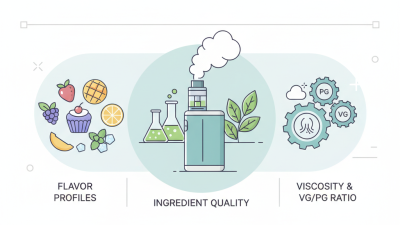
When comparing drink-flavor e-liquid suppliers in China, specify the PG/VG ratio in writing. A 50:50 blend contains equal parts propylene glycol and vegetable glycerin. Its relatively balanced viscosity can suit flavor trials where clarity and consistency matter. A 70:30 PG/VG blend contains more PG, so it is generally thinner and may carry crisp notes more readily. Check the supplier’s notation; some documents list VG first.
Ratios affect texture and flavor perception, but they do not determine quality by themselves. Test the same flavor concentration in both bases, using identical mixing and resting conditions. Note whether citrus seems sharp, cola feels muted, or a creamy note turns heavy. Small differences matter. Results can vary between batches, and a tasting sheet may miss that. I would not treat one sample as proof of reliable production.
Ask suppliers for a written formula specification, batch identification, ingredient documentation, and testing records relevant to the intended application. Confirm that the flavor materials are explicitly suitable for e-liquid use; drink-use suitability alone is not enough. Request samples from separate production batches, then compare aroma, appearance, and viscosity under the same conditions. A ratio is a useful starting point, not a complete specification.
China’s flavor supply chain includes three distinct partners. Flavor houses develop concentrates and provide technical specifications. E-liquid manufacturers blend finished formulations and conduct batch checks. OEM/ODM suppliers may handle formulation, filling, packaging, or several steps together. These roles can overlap, so a directory alone rarely tells the whole story. Ask who owns each production stage, and where testing takes place.
When comparing suppliers, request ingredient documentation, sample records, and clear batch-traceability procedures. Check how teams manage flavor consistency between sample batches and full production runs. A paper label may look polished; practical answers matter more. Confirm that product documentation supports the requirements of the intended market. Factory visits or third-party audits can add useful context, though neither guarantees every batch will be identical. The map is imperfect, and categories sometimes blur.
Tips: Send the same brief to each candidate. Specify flavor profile, target use, packaging needs, and expected volume. Compare written specifications before judging samples. Keep notes on aroma, aftertaste, and batch details. Small differences are easy to miss.
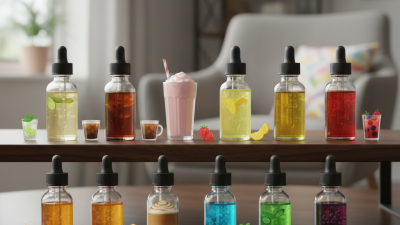
Choosing a drink-flavor e-juice supplier in China takes more than browsing a bright catalog. Check whether its beverage range includes clear profiles such as lemon tea, cola, peach, and iced coffee. Ask for sample sizes and technical sheets, then test each flavor in your intended base. A flavor that smells accurate in a vial may taste flat after mixing. Small details matter.
Compare minimum order quantities before requesting a quote. Some suppliers accept small trial orders, while others require larger runs for custom blends. Confirm whether the quoted MOQ applies per flavor or across the order. Ask for current lead times for samples, repeat orders, and custom development. Get dates in writing. A low MOQ is less useful if one ingredient delays the whole shipment.
Production capacity should match your forecast, not just a supplier’s headline figure. Ask how batches are identified, how consistency is checked, and what records accompany each shipment. Request recent documentation relevant to your destination market, and verify it independently. Visit or arrange a third-party audit when volumes justify the cost. A supplier may sound organized, yet still provide vague answers. That is worth noting. Compare sample quality, communication, lead time, and capacity together; no single number tells the full story.
| Supplier Profile | Beverage Flavor Range | Indicative MOQ | Indicative Lead Time | Production Capacity | Best Fit |
|---|---|---|---|---|---|
| Broad-portfolio flavor manufacturer | Fruit drinks, citrus, tea, coffee, soda, energy-drink, and dessert-style profiles; availability depends on the supplier’s catalog. | Catalog samples may be available from approximately 0.5–1 kg. Commercial order minimums are quote-specific; confirm the exact flavor and pack size. | Allow roughly 3–7 working days for available samples and 7–15 working days for stocked items. Custom work typically takes longer. | Public capacity figures are not standardized. Request confirmed monthly output, batch size, and available production dates for the required product. | Buyers comparing several beverage categories or sourcing multiple flavors from one supplier. |
| Beverage-focused flavor house | Commonly includes fruit beverages, tea and milk-tea notes, coffee, sparkling drinks, and botanical or functional-style profiles. | Sample quantities and production minimums vary by formulation. Ask whether the quoted MOQ applies per flavor or across a combined order. | Stock formulas may be supplied on the seller’s standard schedule; new flavor development requires sampling and approval before production. | Request capacity specifically for the chosen format and packaging. A supplier’s total factory capacity does not establish capacity for a particular flavor. | Projects where beverage authenticity, flavor matching, or application testing matters more than a very broad catalog. |
| Custom-formulation manufacturer | Can develop a tailored profile, such as a branded-style fruit drink, tea blend, coffee beverage, or multi-note soda flavor, subject to technical review. | Custom orders may require a higher minimum than catalog items. Obtain written confirmation of development fees, sample quantities, and production MOQ. | Allow time for briefing, sample preparation, revisions, approval, and production. The supplier should provide a project schedule before work begins. | Confirm pilot-batch and commercial-batch limits separately, along with scale-up validation and repeat-order availability. | Buyers with a defined target taste, application, or product specification. |
| Large-scale contract manufacturer | Flavor range may be broad or limited to established formulas; verify that the supplier can support the specific beverage profile and intended application. | Often most suitable for larger repeat orders, but no single MOQ applies across manufacturers or products. Request a written tiered quote. | Scheduling depends on order size, raw-material availability, packaging, and production queue. Confirm lead time for both the first order and reorders. | Ask for documented monthly capacity, available line time, batch records, and contingency arrangements; do not rely on an unverified headline figure. | Established products with predictable demand and recurring volume requirements. |
Choosing a drink-flavor e-juice supplier in China should start with evidence, not a bright sample bottle. Request a current, batch-matched Certificate of Analysis (COA) for each flavor concentrate or finished product. Check the product name, lot number, test date, methods, and laboratory identity. A COA without clear methods is hard to assess. Ask whether results cover identity, purity, and relevant contaminants, and how out-of-spec batches are handled. Keep the report beside a retained sample. Small details matter: a citrus blend can shift during storage, while a creamy note may flatten or become harsh.
GC–MS screening can compare a flavor’s volatile-compound profile with its specification and flag unexpected peaks. It does not, by itself, prove safety or identify every possible substance. Ask for the test scope, detection limits, and interpretation from a qualified laboratory. For aerosol testing, ISO 20768 sets out a routine vaping-machine method and operating conditions; it is not a certificate of liquid quality. Request the report, device settings, puffing regime, and sample traceability. Paperwork can look tidy. It is not the whole picture. Supplier records, repeat-batch results, and a practical review of the liquid’s appearance and aroma still matter. No single test catches everything.
Verify quality with lot-specific COAs, GC–MS screening, and ISO 20768 testing.
How to use this chart: It illustrates the ISO 20768 reference puff conditions—not supplier test results or a supplier ranking. Ask suppliers for batch-matched COAs, review GC–MS screening scope and results, and confirm that aerosol testing follows the applicable ISO 20768 conditions.
When comparing drink-flavor e-juice suppliers in China, check whether their specifications clearly separate nicotine-free options from nicotine-containing products. For products intended for the EU, the TPD sets a maximum nicotine concentration of 20 mg/mL. Nicotine-containing refill containers are limited to 10 mL. These are product limits, not just label suggestions. Small details matter.
Ask suppliers for current test documents, ingredient information, and labels that match the product batch. Check that nicotine strength appears in mg/mL, not only as a percentage. Request clear bottle-capacity details and confirm that sample packaging matches production packaging. A polished specification sheet can still leave awkward gaps, so verify key figures independently. Requirements may also vary by destination market.
Tips: Before placing an order, compare the label, test report, and invoice for matching product details. Keep dated copies of supplier documents. If a figure is unclear, pause and ask for written clarification rather than guessing.