| Nicotine-Free Verification |
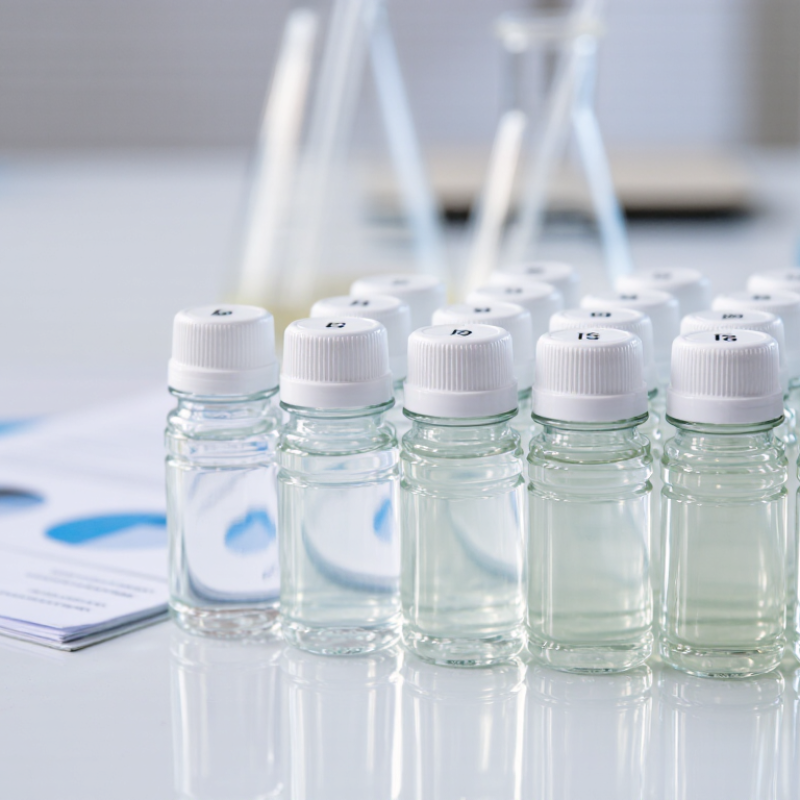
A product marketed as zero nicotine should be supported by laboratory testing with a clearly stated limit of detection or quantification.
|
Batch-specific certificate of analysis (COA), test method, laboratory name, sample identification, test date, and reported nicotine result.
|
Required
The result should be reported as “not detected” or below the laboratory’s stated reporting limit, rather than relying only on marketing language.
|
Is the test performed on the finished e-liquid? Is the batch number on the COA linked to the shipment? Is the laboratory independent and traceable?
|
| Ingredient Transparency |
The formula should identify the primary carrier ingredients, flavouring substances, additives, and any nicotine-related ingredients.
|
Full ingredient declaration, raw-material specifications, allergen statement where applicable, and restricted-substance declaration.
|
Required
Ingredients should be listed by recognized chemical or common names with no unexplained “proprietary blend” covering safety-relevant materials.
|
Are all ingredients suitable for the intended inhalation application? Are any oils, vitamin E acetate, or unapproved pharmaceutical substances present?
|
| Laboratory Competence |
Testing laboratories operating under ISO/IEC 17025 provide a recognized framework for laboratory competence, impartiality, and consistent testing.
|
Current laboratory accreditation certificate, scope of accreditation, test report, analytical method, and quality-control information.
|
ISO/IEC 17025
Prefer laboratories whose accreditation scope covers the relevant chemical or e-liquid analyses.
|
Does the accreditation scope cover nicotine, contaminants, or the exact analytical method used for the product?
|
| Contaminant Screening |
Finished-product testing may include heavy metals, microbial contamination, residual solvents, aldehydes, and other substances required by the destination market or customer specification.
|
Risk-based contaminant panel, detection limits, analytical methods, laboratory results, and corrective-action records for failed batches.
|
Risk-Based
The panel should reflect the ingredients, equipment, packaging, and destination-country requirements.
|
Which contaminants are tested? What limits are used? Are results available for each production batch or at a documented testing frequency?
|
| Manufacturing Quality System |
A documented quality-management system should control purchasing, production, sanitation, calibration, batch release, complaints, and corrective actions.
|
Quality manual, process flow, standard operating procedures, internal-audit records, change-control procedure, and batch-release procedure.
|
Required
Procedures should be implemented in the actual production facility and supported by traceable records.
|
Can the supplier provide an anonymized audit summary? How are deviations, customer complaints, and product recalls handled?
|
| Good Manufacturing Practice |
Manufacturing controls should address hygiene, contamination prevention, personnel training, equipment maintenance, and documented production records.
|
GMP-related certification or audit report, hygiene procedures, training records, environmental-control records, and production batch records.
|
GMP Controls
Certification should be checked for scope, issuing body, facility address, validity, and product category.
|
Does the certification cover e-liquid manufacturing rather than only another product category? Is the audited site the site producing the goods?
|
| Product Traceability |
Each finished batch should be traceable from incoming raw materials through manufacturing, testing, packaging, shipment, and customer delivery.
|
Batch-number system, manufacturing date, expiry or retest policy, raw-material lot records, finished-goods register, and recall procedure.
|
Required
The same batch identifier should appear consistently on the COA, bottle, carton, invoice, and shipping documents.
|
Can the supplier identify all customers affected by a batch issue? How quickly can a batch be placed on hold or recalled?
|
| Packaging Safety |
Packaging requirements vary by market and may include child-resistant closures, leak resistance, tamper evidence, labeling controls, and suitable material compatibility.
|
Packaging specification, closure test report, leak-test records, material compatibility data, and packaging artwork approval process.
|
EN ISO 8317
Where applicable, verify child-resistant packaging against the destination market’s current legal requirements.
|
Is the test certificate issued for the actual closure and container combination? Has the filled package been tested for leakage and compatibility?
|
| Label and Advertising Compliance |
Labels should accurately state nicotine status, volume, ingredients, batch information, warnings, responsible economic operator details, and other information required by the destination jurisdiction.
|
Final artwork, label-control procedure, market-specific compliance review, translation review, and approved packaging mock-up.
|
Market-Specific
“Zero nicotine” claims must not be misleading and should be consistent with laboratory results and local advertising rules.
|
Has the label been reviewed for every intended country? Are health, therapeutic, or cessation claims being avoided unless legally authorized?
|
| European Union Readiness |
Depending on product composition and intended use, EU requirements may involve REACH, CLP classification and labeling, packaging rules, product safety obligations, and national legislation.
|
Safety Data Sheet where required, CLP assessment, substance information, packaging documentation, and country-by-country compliance review.
|
REACH / CLP
Do not treat an EU compliance statement as universal; verify the exact formulation, packaging, and importing-country obligations.
|
Has the formulation been assessed under current EU chemical and product-safety rules? Who is responsible for importer and economic-operator obligations?
|
| United States Readiness |
U.S. requirements depend on product composition, intended use, jurisdiction, and whether the product falls within applicable tobacco-product or other regulatory frameworks.
|
Regulatory classification assessment, ingredient records, manufacturing documentation, labeling review, and state-by-state compliance information.
|
Market-Specific
Obtain specialist U.S. regulatory advice before importing or making commercial claims.
|
Has the supplier assessed both federal and state requirements? Who is responsible for importer, distributor, and recordkeeping obligations?
|
| Chemical Safety Documentation |
Safety Data Sheets should communicate hazards, handling, storage, transport, and emergency information when required by the applicable chemical-safety framework.
|
Current SDS in the required language, ingredient hazard assessment, transport information, revision date, and emergency contact details.
|
Required
The SDS should match the actual formula and product classification supplied to the buyer.
|
Does the SDS identify the correct supplier and product? Is the revision current? Are transport classifications consistent with the shipment?
|
| Raw-Material Control |
Carrier liquids, flavourings, and other inputs should be purchased from qualified sources and checked against defined specifications before use.
|
Approved-supplier list, incoming COAs, raw-material specifications, identity testing, storage records, and supplier-qualification audits.
|
Documented Control
Critical raw materials should not enter production solely on the basis of a supplier’s invoice or marketing specification.
|
Are raw materials tested on receipt? How are expired, damaged, or out-of-specification materials segregated?
|
| Shelf-Life and Stability |
Shelf-life claims should be supported by stability information covering the finished formulation and its final packaging.
|
Stability protocol, real-time or accelerated data, storage conditions, packaging compatibility results, and expiry-date assignment procedure.
|
Required for Commercial Supply
The stated shelf life should be linked to documented storage conditions and a defined testing program.
|
Does the stability study use the actual bottle, cap, label, and formulation? What happens when a product is reformulated?
|
| Order and Supply Reliability |
International buyers should evaluate production capacity, lead times, minimum order quantities, inventory policy, and continuity planning.
|
Capacity statement, production schedule, lead-time history, MOQ terms, business-continuity plan, and backup-source information for critical materials.
|
Commercial Requirement
Supplier commitments should be documented in the quotation, purchase order, quality agreement, or supply contract.
|
What is the normal and peak monthly capacity? How are delays, raw-material shortages, and discontinued flavours communicated?
|
| Pre-Shipment Inspection |
Independent or buyer-approved inspection can verify quantity, packaging, labeling, appearance, documentation, and selected product tests before shipment.
|
Inspection checklist, sampling plan, inspection report, retained samples, photographs, and release authorization.
|
AQL-Based Option
When an acceptance-quality-limit plan is used, the agreed sampling level and defect classifications should be stated in writing.
|
Are critical defects treated differently from cosmetic defects? Who pays for rework, replacement, or failed inspection?
|
| International Shipping and Documentation |
Export documents must accurately describe the goods and comply with customs, transport, packaging, and destination-country requirements.
|
Commercial invoice, packing list, certificate of origin where applicable, SDS, transport classification, customs information, and insurance documents.
|
Required
Product descriptions, quantities, batch numbers, and declared values should match across all shipping documents.
|
Has the supplier shipped to the destination country before? Who is responsible for customs clearance, duties, and regulatory holds?
|
| Commercial Integrity |
A reliable supplier should provide consistent legal-entity information, manufacturing-site details, transparent payment terms, and verifiable certifications.
|
Company registration details, factory address, bank-account consistency, references, certification verification links, and signed quality agreement.
|
Required
Legal, banking, factory, and certification information should be consistent and independently verifiable.
|
Is the contracting entity the same as the manufacturing entity? Are certificates issued to the correct legal entity and production site?
|